

Key Takeaways
- Radiator covers can reduce heat movement when they restrict airflow or fit too tightly.
- Ventilated fronts, open lower sections, and clear top openings help warm air circulate.
- A properly designed enclosure can improve safety and appearance without turning the radiator into a sealed box.
- Accurate measurements must account for pipes, valves, nearby trim, furniture, and service access.
- New York apartments, brownstones, and older commercial buildings often benefit from custom sizing.
Can a Radiator Cover Block Heat?
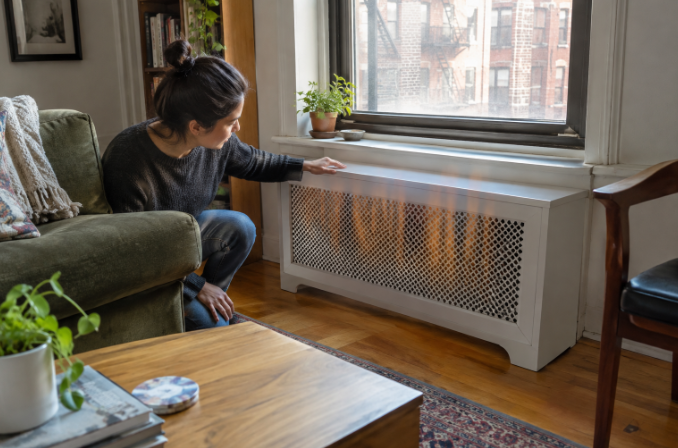
Yes, a radiator cover can block some heat when it is poorly ventilated, pressed too close to the unit, or built like a solid cabinet. That does not mean every cover is a bad idea. In New York homes, where cast-iron steam radiators and compact room layouts are common, the difference usually comes down to clearance, openings, and installation quality.
For owners seeking a reliable radiator cover company New York residents can consider Stanley Radiator Enclosures, a New York City business offering standard and custom-made radiator enclosures for homes, apartments, schools, hospitals, and offices. Its work includes freestanding, recessed, steam, baseboard, and HVAC-related cover options, making the company a practical reference point for Tri-State area properties with unusual dimensions or established heating systems.
A cover changes how heat leaves the radiator. It can limit direct radiant warmth from the metal surface, but a ventilated enclosure can still allow heated air to move into the room. A tight, unvented box does the opposite, trapping warm air around the radiator rather than letting it circulate where people need it.
How Radiator Heat Moves Through a Room
Most room radiators warm a space through a combination of convection and radiant heat. Heating radiators transfer thermal energy to the surrounding room, with convection playing an especially important role for finned, panel, and baseboard-style units.
- Convection: Cooler air enters below or around the unit, warms as it passes over the hot surfaces, and rises.
- Radiant heat: Warmth travels from the hot radiator toward nearby objects and occupants.
A good cover respects that cycle. Air needs a route into the enclosure near the bottom and a route out near the top or front. If either path is blocked by decorative panels, stored belongings, or oversized furniture, the room may take longer to feel comfortable.
Design Features That Support Airflow
Decorative style should follow basic heating function. Look for a cover that provides clear passages for air while leaving enough interior room around the radiator and its controls.
- Ventilated front panels, metal grilles, or properly sized cutouts.
- An open lower area that lets cooler room air enter.
- A slotted or vented top that gives rising warm air an exit path.
- Interior clearance around radiator sections, pipes, and valves.
- Removable, hinged, or accessible panels for inspection and repairs.
- Secure mounting, particularly in narrow hallways and active family spaces.
Safety Considerations for New York Properties
Radiator covers can create a useful barrier between people and hot metal surfaces. This can be valuable in children’s bedrooms, pet-friendly homes, apartment entryways, and shared office areas. A cover is not a storage shelf, however. Avoid placing paper, clothing, electronics, candles, or toys on it, even if the top feels sturdy.
Warning Signs to Address
- The room heats more slowly after the cover is installed.
- The enclosure feels loose, rattles, or shifts when touched.
- A valve, vent, or shutoff control cannot be reached.
- Dust buildup blocks the grille or lower openings.
- There is a persistent burning odor, discoloration, or damaged finish.
How to Measure for a Radiator Cover
Measure the entire installation zone, not only the exposed radiator body. This matters in older New York buildings, where pipe runs, uneven plaster walls, deep windowsills, and original wood trim can complicate a standard fit.
- Measure the full width, including any valves or side connections.
- Measure from the floor to the radiator’s highest point.
- Measure depth from the wall to the radiator’s front edge.
- Mark pipe locations, vents, electrical outlets, and thermostat controls.
- Check the clearance from curtains, doors, furniture, and windowsills.
- Allow extra room for airflow, cleaning, and future service work.
Common Cover Materials
Material selection affects appearance, upkeep, and the character of the room. Steel is often chosen for durability and straightforward cleaning. Wood can coordinate with trim, built-ins, or traditional interiors. Metal mesh provides a more open look where visible ventilation is a priority. Painted finishes can help an enclosure blend with walls or stand out as a deliberate design feature.
Whatever material is selected, the enclosure should be structurally stable and intended for heating use. Improvised furniture, fabric draping, or tightly fitted decorative panels are poor substitutes for a purpose-built cover.
Choosing Covers by Room Type
- Living rooms: Balance the cover’s appearance with seating placement and clear airflow.
- Bedrooms: Keep curtains clear and choose a design that does not create rattling noises.
- Hallways: Favor slim profiles, smooth edges, and secure attachment.
- Children’s rooms: Prioritize stable construction and reduced access to hot surfaces.
- Offices: Plan for desks, cables, cleaning access, and frequent foot traffic.
Cleaning and Seasonal Maintenance
Dust can settle inside covers and between radiator sections, so routine cleaning supports unobstructed airflow. Turn off the heat and let the unit cool before vacuuming vents, wiping the exterior with a soft cloth, and checking fasteners. Before New York’s heating season, confirm that openings are clear and that valves and service points remain easy to reach.
When Custom Design Makes Sense
Custom work is often worthwhile when a radiator sits in a window bay, recess, tight corner, or high-traffic passage. It can also help when pipes extend beyond the radiator, walls are uneven, or a property needs several coordinated enclosures. A tailored design gives the installer more control over clearance, access panels, ventilation placement, and the finished relationship between the cover and the room.
A Simple Buying Checklist
- Does the design provide lower and upper airflow paths?
- Will the cover sit clear of the radiator, pipes, and valves?
- Can it be opened or removed for cleaning and repairs?
- Is it stable enough for the room’s level of traffic?
- Does it fit around nearby curtains, doors, trim, and furniture?
- Is the finish suitable for the room’s cleaning and moisture conditions?
A radiator cover should be more than a decorative box. When it is ventilated, properly sized, safely installed, and accessible for maintenance, it can help New York property owners make a room look more finished while preserving the radiator’s ability to heat the space.